
Pick a Peck of Peppers!
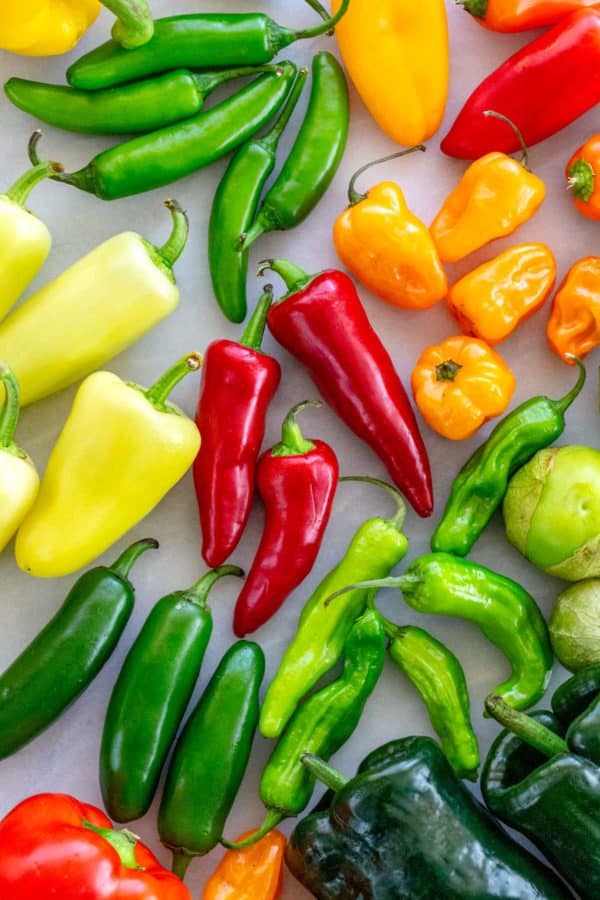
It’s really true: spicy food can help keep you cool in the heat. It causes you to sweat, which cools down your skin. So let’s take a look at hot peppers and using them in your kitchen.
The chili pepper originated in Mexico and spread across the New World, a flavorful staple in its cuisine long before Europeans landed. The explorers took the riches of this culinary discovery back to the Old World. Portuguese traders carried the chili to Asia, where it became an integral part of the cuisine of many Asian countries. Now China and India are among some of the biggest producers in the world. You might have heard of the Scoville Scale, which rates the heat of peppers. It has been replaced by a more scientific system which measures the heat-producing chemicals in the pepper, known as High Performance Liquid Chromatography (HPLC). That chemical is capsaicin. Whichever way you measure it, peppers range from mild varieties such as Anaheim peppers and poblanos, to hotter varieties such as the Scotch bonnet, Thai bird’s eye, and ghost pepper.
Want to control the heat in your recipe? Keep in mind that within a variety, smaller peppers are usually hotter. Big, fat poblanos are great for stuffed peppers because they won’t be as spicy as the smaller poblanos you cut up for salsa. Remove the seeds and veins to tame the heat, or leave them in if you prefer the burn. (The capsaicin in peppers is actually found in the veins, not the seeds; the seeds pick up the heat from proximity.) For soups, marinades and other liquid-based dishes, you can also put the pepper in whole to impart some of the flavor without having pieces of pepper in your dish … just make sure you pull it out before you eat! Handle all but the mildest peppers with care. For particularly spicy peppers, such as serranos, you may want to wear gloves while chopping and handling. Regardless, clean your hands and your cutting board thoroughly after working with peppers. Avoid touching your hands or wiping them on towels. It’s easy to transfer a bit of capsaicin to another surface.
Bitten off more than you can chew? Don’t reach for water: capsaicin is an oil, and just like the old saying, it won’t mix. Instead, pour yourself a glass of milk. The protein in milk, casein, is a fat that acts on capsaicin in a manner similar to detergent, breaking up the molecules.
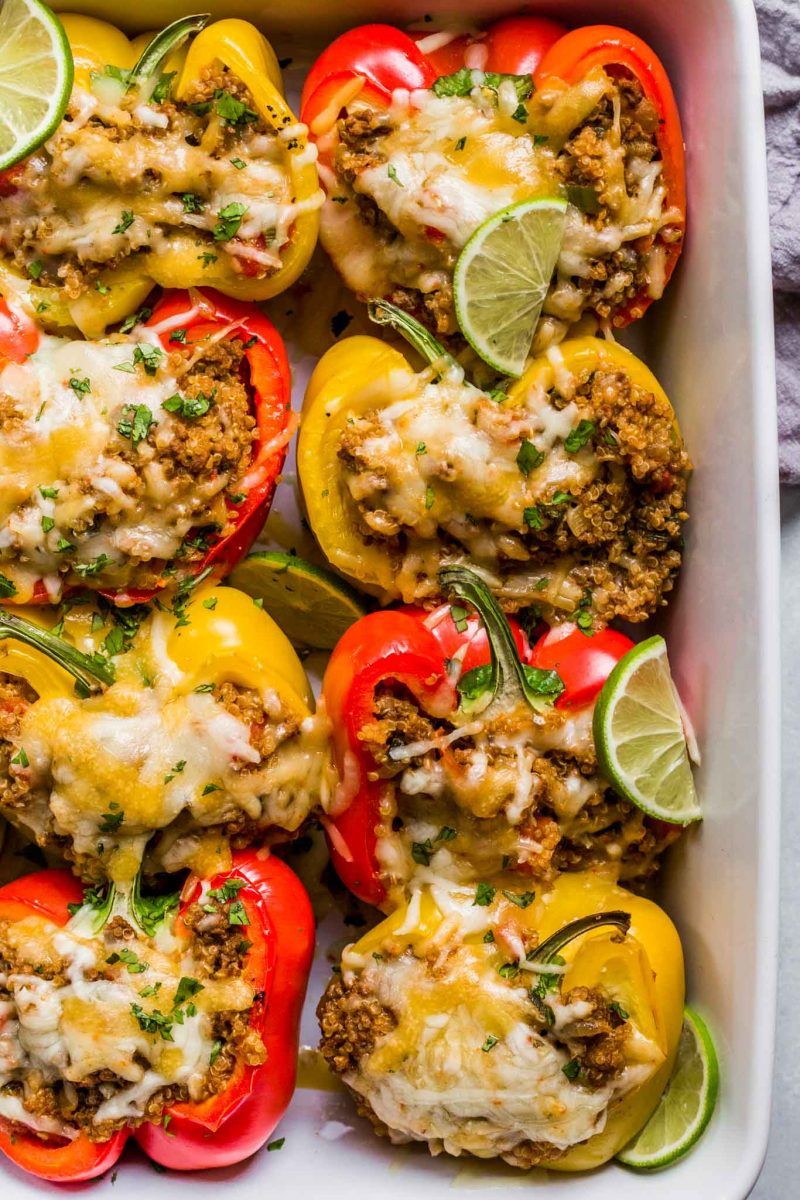
Southwest Stuffed Peppers
4 poblano peppers halved and seeds/membranes removed
1 pound lean ground beef OR chorizo
1 teaspoon each ground cumin, chili powder, garlic powder
1 cup cooked long grain white rice
1/2 cup canned black beans, drained
1/2 cup frozen or canned corn (drained)
1 15-ounce can diced tomatoes, drained
1 4-ounce can diced green chiles
1/2-1 cup grated mozzarella OR Mexican-blend cheese
Preheat oven to 350 degrees and lightly grease a large baking sheet. Arrange halved poblano peppers in a single layer on the baking sheet so that they aren’t overlapping. Bake for 10-15 minutes while you move on to the next step. Add ground beef (or preferred meat choice) and rice to a large skillet, and season with the cumin, chili powder, and garlic powder. Saute over medium heat for 5-8 minutes until meat is browned and cooked through. Stir in the black beans, corn, diced tomatoes, and green chiles. Cook another 1-2 minutes. Spoon mixture into the peppers, sprinkle with cheese, and return to oven for another 10 minutes or so until peppers are tender and cheese is melted. Allow to cool slightly before serving.